MT-1 vs MT-2: Structure, Receptor Research and Analytical Differences
A research-focused comparison of MT-1 and MT-2, covering peptide structure, melanocortin receptor research, analytical identity and batch verification.
Research insights, peptide science, and the latest from ZENTRA.
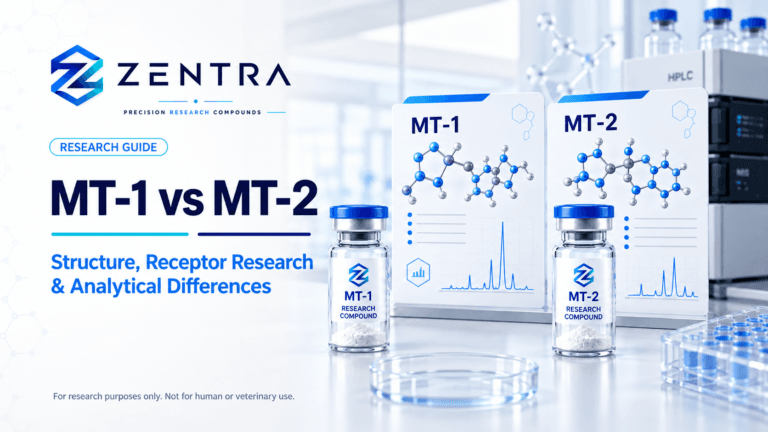
A research-focused comparison of MT-1 and MT-2, covering peptide structure, melanocortin receptor research, analytical identity and batch verification.

Research-use notice: This article discusses Ipamorelin as a laboratory research compound. It is not medical advice and does not provide instructions for human or veterinary use. Short answer: Ipamorelin is a synthetic pentapeptide studied as a selective agonist of the growth hormone secretagogue receptor, commonly abbreviated GHS-R. In laboratory research, the important questions are not…

Research-use notice: This guide concerns laboratory solvent selection only. It is not a preparation guide for human or veterinary administration. Short answer: Acetic acid water and bacteriostatic water are not interchangeable. Acetic acid water provides an acidic environment that may help solubilise certain research compounds. Bacteriostatic water is water containing a preservative—commonly 0.9% benzyl alcohol…

Research-use notice: This article discusses Thymosin Alpha-1 as a laboratory research compound. It is not medical advice and contains no instructions for human or veterinary use. Short answer: Thymosin Alpha-1 (TA1) is a synthetic 28-amino-acid peptide corresponding to an N-terminally acetylated thymosin sequence. It is studied in laboratory models involving immune signalling and host-response pathways….

Third-party peptide testing means analytical work is performed by a laboratory that is separate from the supplier making the product claim. Independence can add a useful external check, but the phrase is not a complete quality standard by itself. The value of the claim depends on the sample submitted, the method used, the report produced…

This peptide testing glossary defines the analytical and documentation terms commonly encountered on research-peptide product pages and Certificates of Analysis. The definitions are deliberately limited: a term should describe what the evidence establishes without quietly turning into a broader quality or safety claim. Use this glossary alongside the report: definitions provide context, but the method,…

Peptide batch traceability is the documented connection between a physical research material and the records that describe it. A useful system allows a researcher to move from the batch code printed on a vial to the matching analytical report without relying on a generic purity badge or an unrelated sample certificate. Key point: a Certificate…

Peptide Purity Explained: What Does 99% HPLC Purity Actually Mean? For research purposes only. Not for human or veterinary use. Peptide purity is an analytical description of how much of a tested sample is represented by the intended component under a stated method. A preparation may contain the target alongside detectable related species. A purity…

For research purposes only. Not for human or veterinary use. BPC-157 is a short peptide that appears frequently in experimental literature concerning tissue biology, vascular signalling and gastrointestinal models. Interest in the BPC-157 peptide has also made careful evidence reading and analytical documentation important. This guide distinguishes what laboratory and animal studies have investigated from…

For research purposes only. Not for human or veterinary use. What Is MOTS-c? Mitochondrial Peptide Structure & Research MOTS-c is a short mitochondrial peptide whose name expands to mitochondrial open reading frame of the 12S rRNA type-c. It was identified from a short open reading frame within mitochondrial DNA (mtDNA), specifically the region annotated as…
Get exclusive deals and early access to new products.
By signing up, you agree to receive marketing emails from ZENTRA. You can unsubscribe at any time. See our Privacy Policy.
© 2026 ZENTRA Peptides. All rights reserved.
ZENTRA Peptides is a trading name of Zentra Brands Limited
Company No. 17212134
Legion House, 75 Lower Road, Kenley, England, CR8 5NH
All products are sold strictly for research purposes only. Not for human consumption.
Get exclusive deals, early access to new products, and research updates.
Get 20% off your first order — register for free
×Enter your email to receive your exclusive first-order discount code.
By signing up, you agree to receive marketing emails from ZENTRA. You can unsubscribe at any time. See our Privacy Policy.
Your code:
WELCOME20
We've also sent this to your email.
Check your junk or spam folder if you don't see it in your inbox.

Purchase Disclaimer
By purchasing from ZENTRA Peptides, you acknowledge and agree: All products are sold strictly for research purposes only. Not for human consumption. The buyer is responsible for ensuring compliance with all relevant laws and regulations. ZENTRA Peptides holds no liability for misuse of products or any adverse outcomes. Your purchase signifies your understanding and agreement to these terms.
Press Enter or click Search to find products
Choose analytics cookies to measure site use, and Meta advertising cookies to measure ad visits, sign-ups and purchases and support relevant ads. Details
