Anti-Aging Peptide Research: GHK-Cu, NAD+ and Beyond
For research purposes only. All peptide compounds and cofactors discussed in this article are intended strictly for laboratory research purposes only. They are not approved for human consumption.
Aging is a complex, multi-faceted biological process characterized by the progressive decline of cellular function, genomic instability, and a reduced capacity for tissue regeneration. At the molecular level, aging is governed by several distinct pathways, including telomere attrition, cellular senescence, mitochondrial dysfunction, and epigenetic alterations. In the search for interventions capable of modulating these pathways, biogerontologists have identified specific peptide sequences and cofactors—such as GHK-Cu, NAD+ precursors, and Epitalon—as key research tools for studying cellular rejuvenation and longevity.
Key Longevity Compounds in Contemporary Research
1. GHK-Cu: The Copper Peptide
GHK (Glycyl-L-histidyl-L-lysine) is a naturally occurring tripeptide found in human plasma, saliva, and urine. It has a remarkably high affinity for copper, readily forming the complex GHK-Cu. First isolated in 1973, GHK-Cu levels decline significantly with age—from approximately 200 ng/mL at age 20 to around 80 ng/mL at age 60. In laboratory research, GHK-Cu has been shown to regulate a vast array of genes involved in tissue regeneration, anti-inflammatory responses, and antioxidant defense systems.
2. NAD+ and its Precursors
Nicotinamide Adenine Dinucleotide (NAD+) is an essential coenzyme found in every living cell, acting as a critical cofactor in cellular respiration, ATP production, and DNA repair. Like GHK-Cu, NAD+ levels decline by up to 50% by middle age. Preclinical research focuses on NAD+ replenishment via precursors like Nicotinamide Mononucleotide (NMN) to study their impact on mitochondrial health, sirtuin activation, and metabolic longevity.
3. Epitalon: The Telomerase Activator
Epitalon (also known as Epithalon) is a synthetic tetrapeptide composed of four amino acids (Ala-Glu-Asp-Gly). It is a synthetic analogue of Epithalamin, a natural peptide hormone secreted by the pineal gland. Epitalon is primarily researched for its ability to upregulate telomerase activity—the enzyme responsible for maintaining and elongating telomeres at the ends of chromosomes.
Comparison of Anti-Aging Compounds under Investigation
| Compound | Molecular Class | Primary Site of Action | Key Aging Pathway | Research Focus |
|---|---|---|---|---|
| GHK-Cu | Tripeptide-Copper Complex | Extracellular Matrix, Nucleus | Gene Expression, Collagen Synthesis, Antioxidant Up-regulation | Skin regeneration, wound healing, systemic anti-inflammatory pathways |
| NAD+ Precursors | Pyridine Nucleotide Cofactor | Mitochondria, Nucleus | Mitochondrial Function, Sirtuin Activation, DNA Repair | Metabolic rate, cellular energy production, epigenetic regulation |
| Epitalon | Tetrapeptide (4 Amino Acids) | Chromosomal Telomeres | Telomere Maintenance, Telomerase Gene Expression | Cellular lifespan extension, circadian rhythm regulation |
Cellular Pathways and Mechanisms of Action
1. Gene Expression Modulation by GHK-Cu
Research indicates that GHK-Cu is not merely a structural peptide but a powerful regulator of gene transcription. Broad genomic studies have shown that GHK-Cu can reset gene expression to a healthier, more youthful state in over 4,000 human genes. It directly stimulates fibroblasts to increase the synthesis of collagen, elastin, and glycosaminoglycans—critical for maintaining the structural integrity of the extracellular matrix. GHK-Cu also up-regulates genes responsible for antioxidant enzymes such as superoxide dismutase (SOD) and catalase, neutralizing free radicals and reducing oxidative stress in cellular models.
2. Sirtuin Activation and Mitochondrial Health via NAD+
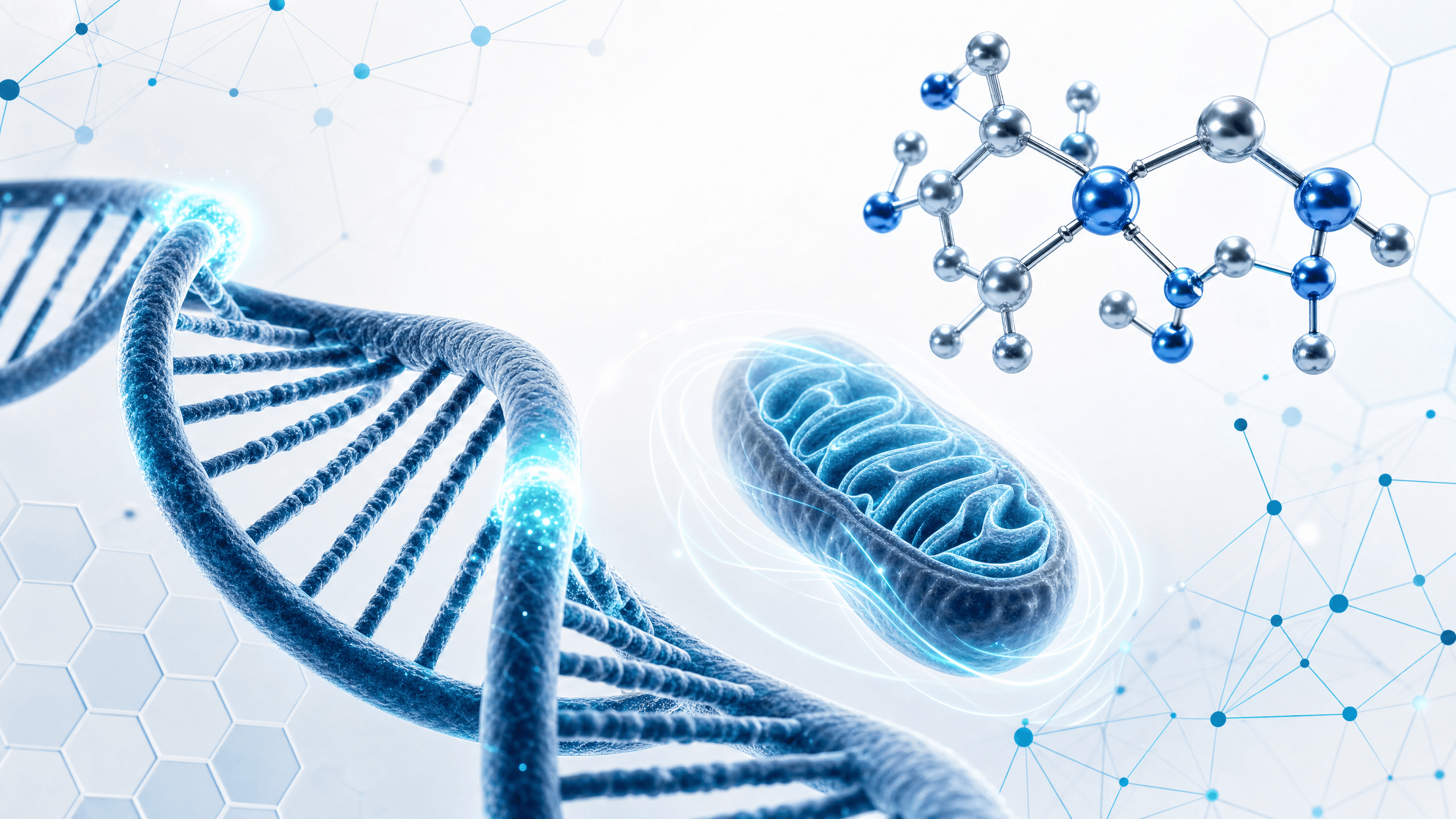
NAD+ is the obligate substrate for Sirtuins (SIRT1-SIRT7), a family of NAD+-dependent deacetylases often referred to as “longevity genes.” Activation of SIRT1 and SIRT3 by NAD+ promotes mitochondrial biogenesis via the PGC-1alpha pathway, effectively replacing damaged mitochondria with healthy, high-efficiency organelles. NAD+ is also consumed by Poly(ADP-ribose) polymerases (PARPs) to detect and repair DNA double-strand breaks, maintaining genomic stability. Maintaining high NAD+ levels has been shown to delay the onset of cellular senescence, preventing cells from entering a permanent state of arrest where they secrete pro-inflammatory cytokines.
3. Telomerase Activation and Epitalon
Each time a somatic cell divides, its telomeres shorten—a phenomenon known as the Hayflick Limit. Once telomeres reach a critically short length, the cell undergoes senescence or apoptosis. Epitalon has been shown to stimulate the expression of the Telomerase Reverse Transcriptase (TERT) gene, activating the telomerase enzyme in somatic cells. By actively elongating telomeres, Epitalon allows cells to exceed their normal division limits, maintaining proliferative capacity in vitro. Research also shows that Epitalon restores melatonin synthesis in the pineal gland of aging animal models, normalizing circadian rhythms and sleep-wake cycles crucial for systemic cellular repair.
Empirical Findings in Scientific Literature
Lifespan Extension and Cellular Health
In long-term rodent studies, administration of Epitalon resulted in a significant extension of maximum lifespan (up to 11–12%) and a reduction in spontaneous tumor development. The treated animals also exhibited improved physical coordination, preserved immune function, and a more youthful hormonal profile. Research into NAD+ restoration has shown that elevating NAD+ levels in aged mice reverses aspects of vascular aging, improves skeletal muscle insulin sensitivity, and restores mitochondrial function to levels comparable to young control mice within just one week of administration.
Tissue Regeneration and Repair
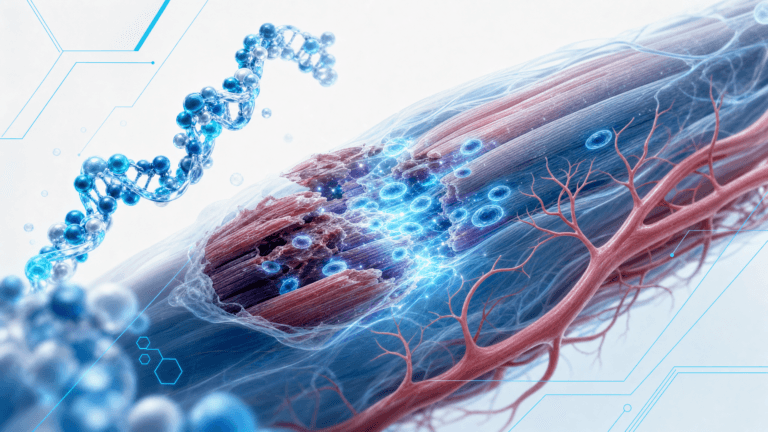
Studies on GHK-Cu have demonstrated accelerated healing across a variety of tissues. In vitro studies show GHK-Cu stimulates collagen synthesis by up to 70% compared to controls, outperforming standard anti-aging compounds. It also promotes axon outgrowth and myelin sheath formation in nerve injury models, and shows potential in reversing tissue damage in chronic obstructive pulmonary disease (COPD) models by restoring normal lung fibroblast function.
Conclusion and Future Research Directions
The field of biogerontology has transitioned from observing aging as an inevitable decline to actively targeting the molecular drivers of the process. Compounds like GHK-Cu, NAD+, and Epitalon offer highly precise mechanisms to intervene in gene expression, mitochondrial decay, and telomere shortening. As laboratory research progresses, scientists are investigating multi-pathway combination therapies to address all hallmarks of aging simultaneously, aiming to not only extend lifespan but to optimize the healthspan of biological models.
For research purposes only. Not intended for human consumption.