Recovery & Tissue Repair: The Role of Peptides in Research
For research purposes only. All peptide compounds discussed in this article are intended strictly for laboratory research purposes only. They are not approved for human consumption.
The physiological processes governing tissue regeneration, wound healing, and musculoskeletal recovery are among the most complex systems in mammalian biology. In recent years, regenerative medicine research has focused heavily on specific peptide sequences capable of modulating these pathways. Among these, BPC-157 and TB-500 (a synthetic segment of Thymosin Beta-4) have emerged as two of the most promising research agents for accelerating soft tissue repair.
Understanding BPC-157 and TB-500
While both BPC-157 and TB-500 are classified as regenerative research peptides, they are derived from different biological sources and utilize distinct molecular pathways to facilitate tissue repair.
BPC-157: Body Protection Compound
BPC-157 is a pentadecapeptide composed of 15 amino acids. It is a synthetic sequence derived from a naturally occurring protective protein found in human gastric juice. In laboratory models, BPC-157 has demonstrated remarkably stable characteristics, resisting degradation in acidic environments and showing systemic regenerative effects on various tissues, including tendons, ligaments, skeletal muscle, and the gastrointestinal tract.
TB-500: Thymosin Beta-4 Analogue
TB-500 is a synthetic peptide sequence representing the active region of Thymosin Beta-4 (Tβ4), a naturally occurring protein highly abundant in blood platelets and wound fluid. The active segment is responsible for the protein’s cell-migration, actin-sequestering, and wound-healing properties. Because TB-500 is a much smaller molecule than full-length Thymosin Beta-4, it exhibits superior tissue penetration and receptor binding kinetics in laboratory research models.
Comparison of Recovery Peptides in Research
| Peptide | Structure | Biological Origin | Primary Tissue Targets | Key Pathway |
|---|---|---|---|---|
| BPC-157 | 15 Amino Acids | Gastric Juice Protective Protein | Tendons, Ligaments, Bone, GI Mucosa | VEGF Up-regulation, Nitric Oxide Pathway |
| TB-500 | 43 Amino Acids | Thymosin Beta-4 | Skeletal Muscle, Skin, Blood Vessels | Actin Polymerization, MMP Modulation |
Mechanisms of Tissue Repair in Laboratory Models
1. Angiogenesis and VEGF Up-regulation
Effective wound healing requires the rapid restoration of blood flow to damaged, hypoxic tissues. Both BPC-157 and TB-500 are potent stimulators of angiogenesis. BPC-157 up-regulates the expression of Vascular Endothelial Growth Factor (VEGF) and its receptor VEGFR2, triggering the proliferation and migration of endothelial cells to form new capillary networks. TB-500 promotes endothelial cell differentiation and stimulates migration through extracellular matrix barriers, facilitating rapid revascularization of damaged tissues.
2. Actin Sequestering and Cellular Migration
Cell migration is a fundamental step in tissue repair; fibroblasts, inflammatory cells, and stem cells must travel to the site of injury to rebuild the tissue matrix. TB-500 is the primary cellular regulator of actin, a structural protein essential for cell motility and contractility. By binding to G-actin (monomeric actin), TB-500 prevents its polymerization into F-actin, maintaining a pool of actin monomers that the cell can rapidly deploy to form lamellipodia and filopodia—cellular projections that allow rapid migration to injured areas.
3. Collagen Synthesis and Tendon-to-Bone Healing
Tendons and ligaments are notorious for their slow healing rates due to poor vascularization. BPC-157 has shown profound efficacy in addressing this limitation in preclinical models. It accelerates the growth of tendon fibroblasts, promotes the organized deposition of Collagen Type I (which provides tensile strength) over Collagen Type III (which forms disorganized scar tissue), and increases the expression of growth hormone receptors on fibroblasts—amplifying the body’s natural regenerative signals.
Empirical Findings in Scientific Literature
Musculoskeletal Injury Recovery
In animal models of Achilles tendon rupture, systemic or localized administration of BPC-157 significantly accelerated functional recovery and biomechanical strength. The treated tendons exhibited a histologically normal appearance with aligned collagen fibers, whereas untreated controls showed disorganized scar tissue and reduced load-bearing capacity.
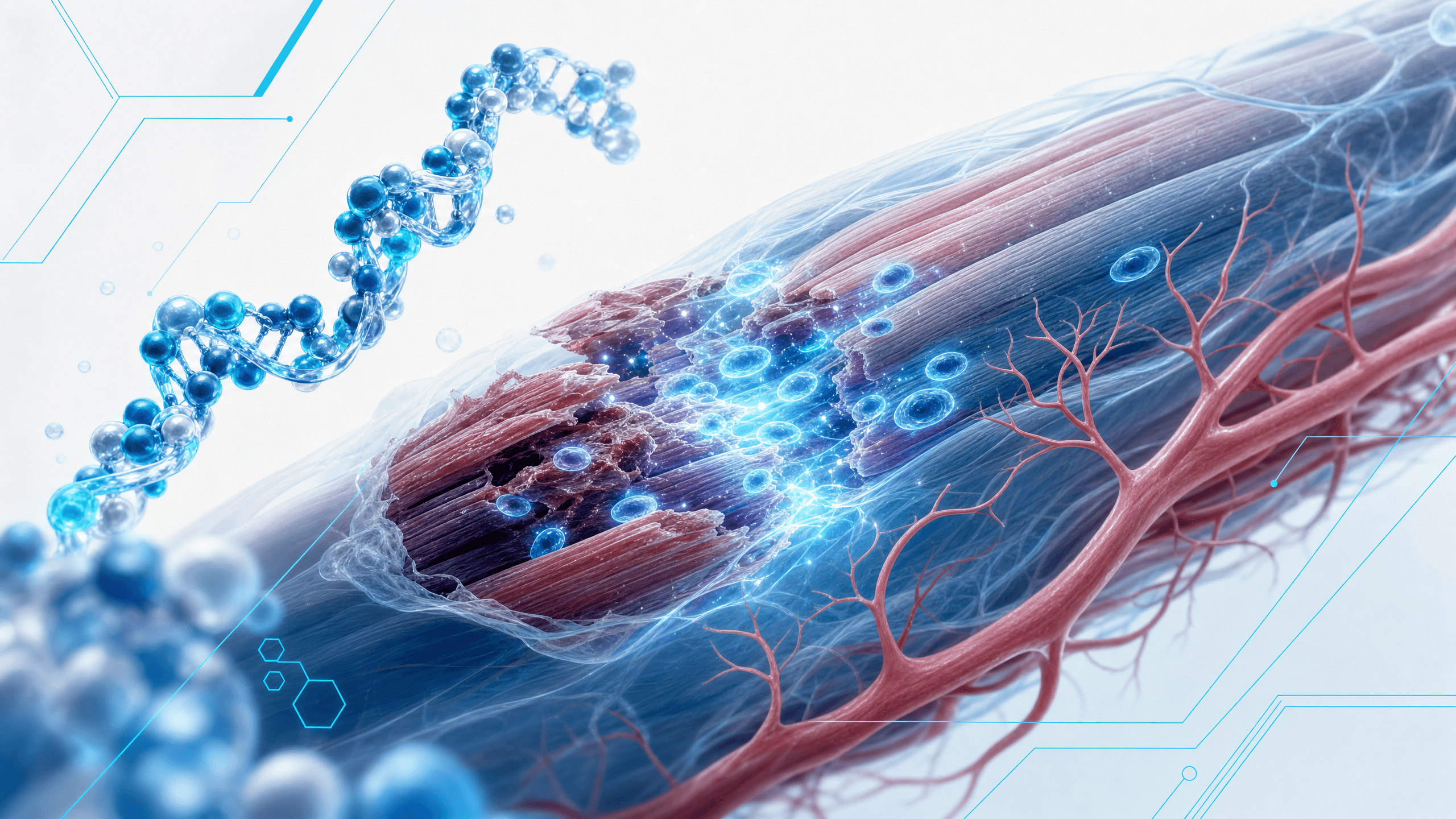
TB-500 research has demonstrated accelerated recovery in skeletal muscle injuries. In models of muscle laceration or crush injury, TB-500 administration resulted in a rapid reduction in inflammatory infiltrate, increased myofiber regeneration, and a marked decrease in fibrotic scar tissue—allowing the muscle to recover its original contractile force much faster than control groups.
Systemic and Gastrointestinal Healing
Beyond the musculoskeletal system, BPC-157 has demonstrated systemic protective properties. It is highly effective in reversing inflammatory bowel disease (IBD) and gastric ulcers in animal models by maintaining mucosal integrity. It also shows cytoprotective effects on the liver, pancreas, and brain, and promotes the healing of osteotendinous junctions—historically difficult to repair due to the transition from soft tissue to hard bone.
Conclusion and Future Research Directions
Regenerative peptide research represents a paradigm shift in how science approaches tissue recovery. Rather than simply suppressing inflammation, compounds like BPC-157 and TB-500 actively instruct cells to migrate, rebuild, and revascularize damaged areas. Future laboratory studies are focused on evaluating the synergistic effects of co-administering BPC-157 and TB-500, as their complementary pathways may offer a highly potent dual-action protocol for soft tissue regeneration.
For research purposes only. Not intended for human consumption.