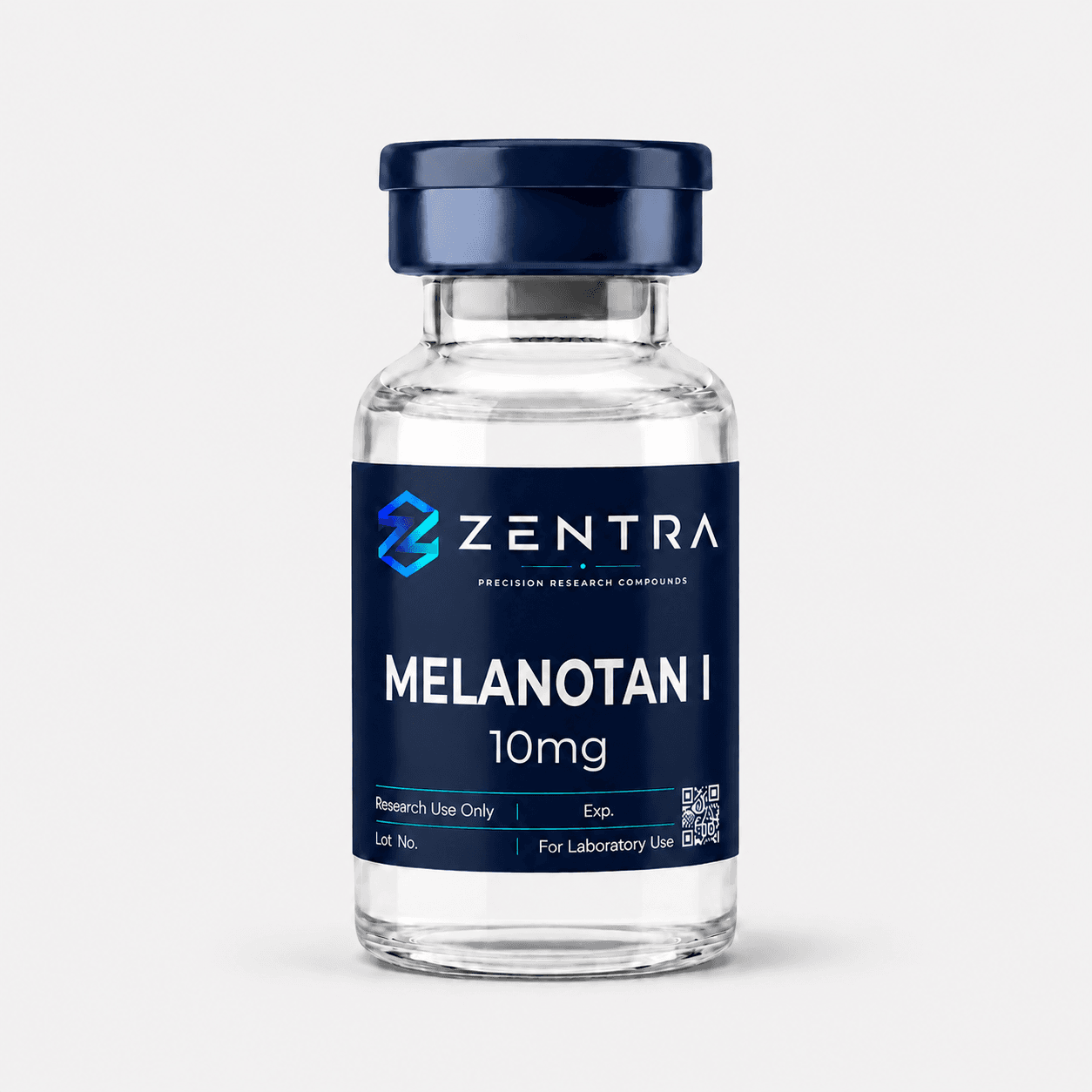
Melanotan I
£24.99
Melanotan I (Afamelanotide) is a synthetic alpha-MSH analogue researched for its role in melanogenesis and photoprotection. Available in 10mg vials. For research purposes only.
Be the First to Know
This peptide is coming soon to ZENTRA. Enter your email below and we'll notify you the moment it's available.
No spam, ever. Unsubscribe at any time.
Description
For research purposes only. This product is supplied exclusively for scientific laboratory research and analytical purposes. It is not intended for human or animal use, and must not be misused in any way that contravenes MHRA regulations or applicable laws.
Product Overview
Melanotan I is a high-purity synthetic linear analogue of alpha-melanocyte-stimulating hormone (α-MSH) with enhanced metabolic stability and MC1R affinity, developed for laboratory evaluation. This product is synthesized to meet the highest industry standards for consistency and reliability in research applications.
Key Specifications
| Molecular Weight | 1646.9 g/mol |
| Sequence/Formula | Ac-Ser-Tyr-Ser-Nle-Glu-His-D-Phe-Arg-Trp-Gly-Lys-Pro-Val-NH₂ |
| Purity | >99% |
| Form | Lyophilized powder |
| Appearance | White powder |
Storage Instructions
- Long-term Storage: Store at -20°C to maintain maximum stability.
- Short-term Storage: Store at 2-8°C for up to 3 months.
- Protection: Keep away from direct light and moisture.
Reconstitution Guidelines
For optimal results, reconstitute using Bacteriostatic Water. Add the diluent slowly along the side of the vial and allow the powder to dissolve through gentle swirling. Do not shake the vial, as this may denature the compound.
Research Applications
Melanotan I is investigated in dermatological and melanocortin system research for its capacity to stimulate eumelanin synthesis in melanocytes through MC1R activation. Research has focused on its photoprotective mechanism as a potential approach to reducing UV radiation-induced DNA damage in photosensitive skin conditions, including erythropoietic protoporphyria and polymorphous light eruption. Studies have also explored its broader melanocortin pharmacology, including MC1R interactions in immune cells, anti-inflammatory properties, and effects on the cutaneous immune response. Research programmes have examined its role in skin cancer risk modulation and wound healing in preclinical models.
Certificate of Analysis (CoA): Available upon request for every batch.
Disclaimer: For research use only. Not for human or veterinary consumption.


Reviews
There are no reviews yet.