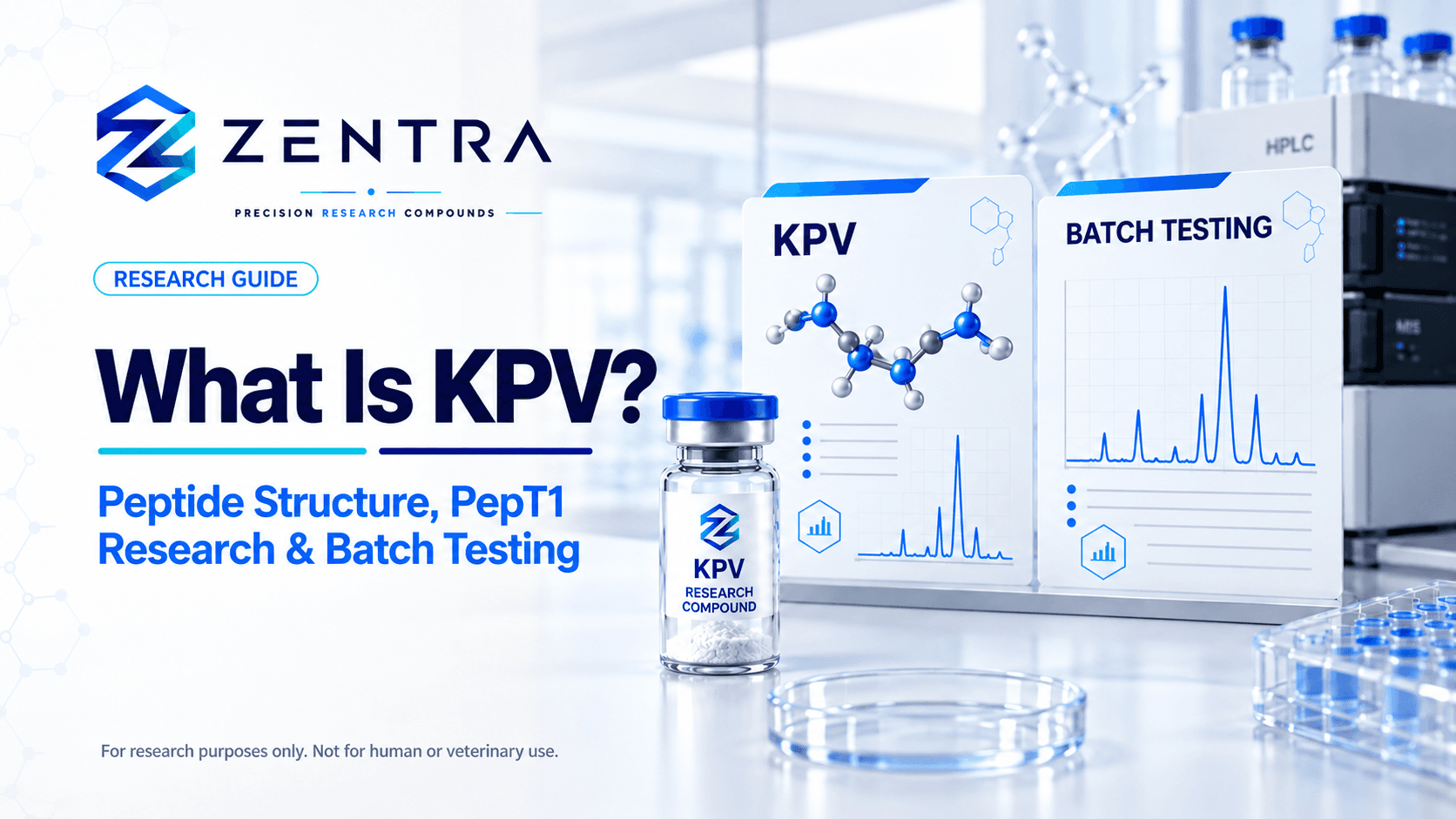
What Is KPV? Peptide Structure, PepT1 Research and Batch Testing
KPV is a short peptide named after its three amino acids: lysine, proline and valine. It appears in experimental research on inflammatory signalling and peptide transport. For laboratories, the useful questions are what material a study used, which model was tested and how the supplied batch was identified.
This guide separates the published research from the documentation needed to evaluate a research material.
What does KPV stand for?
K, P and V are the one-letter abbreviations for lysine, proline and valine. KPV is therefore a tripeptide. The name describes its sequence, but laboratory records should also identify the terminal chemistry, salt or counterion where documented, and the batch supplied.
Short sequences still require precise identification. A label reading “peptide” or a percentage purity figure cannot distinguish KPV from a different compound.
Why is PepT1 relevant to KPV research?
Dalmasso and colleagues investigated KPV in intestinal epithelial and immune-cell systems, alongside two mouse models of colitis. Their 2008 paper reported PepT1-mediated uptake and changes in inflammatory signalling, including NF-κB and MAP kinase pathways. These are findings from defined experimental systems, rather than evidence that a commercial research vial produces a clinical benefit. Read the original KPV/PepT1 study.
When comparing papers, record the model, transporter expression, comparator and endpoint. A change in a cell-signalling assay and a change in an animal disease score answer different research questions.
How should researchers interpret the evidence?
Keep three things separate: the identity of the molecule, its measured effect in a particular experiment, and the suitability of a supplied batch for a new project. A published result does not verify the vial in front of you.
In particular, human-derived cells are not the same as a study in human participants. The cited cell and mouse experiments do not establish a treatment protocol, human safety or a patient outcome.
A practical KPV batch checklist
- Identity: confirm that the report names KPV and documents the expected material. An identity result and a purity result answer different questions.
- Traceability: match the vial batch identifier with the certificate of analysis, rather than relying on a report for an earlier lot.
- Method: note the chromatographic method, identity method and any reported limitations.
- Scope: check whether content, water, counterions, sterility or endotoxins were actually measured. Do not infer unreported tests from HPLC purity.
- Documentation: retain the report, receipt date and handling record with the experimental file.
Use our guide to reading a peptide COA and peptide testing and verification hub to review the evidence.
KPV as a single material and in blends
The KLOW-80 80mg research blend combines KPV with BPC-157, TB-500 and GHK-Cu. Its product listing provides the fixed component amounts and batch documentation. Results from KPV alone do not establish the properties of the combined material.
A single-compound KPV experiment and a multi-compound experiment require different controls. A finding about KPV alone cannot be attributed automatically to an entire blend. Record every constituent and use a design that can distinguish the contribution of each variable. Our experimental design and controls guide explains that distinction.
For catalogue details, see the KPV research material listing. ZENTRA’s QR code opens the batch verification page; enter the batch number there to check the available documentation.
Frequently asked questions
Is KPV a protein?
KPV is a three-residue peptide. It is a distinct, short sequence, rather than a full-length protein.
Does high HPLC purity establish human suitability?
No. Chromatographic purity does not establish clinical safety, sterility, approval or suitability for human use.
Does a published KPV study verify a supplier’s batch?
No. A supplier’s material needs its own batch-specific analytical evidence.
Research-use notice: Educational laboratory information only. ZENTRA compounds are supplied for laboratory and scientific research, not for human or veterinary use.