HPLC vs Mass Spectrometry for Peptide Testing
The Pillars of Analytical Chemistry in Peptide Synthesis
In the rigorous environment of laboratory research, the validity of experimental data is entirely dependent on the quality of the reagents used. When working with complex amino acid sequences, researchers must be absolutely certain of their compound’s identity and purity. This certainty is provided by two fundamental analytical techniques: High-Performance Liquid Chromatography (HPLC) and Mass Spectrometry (MS).
For laboratories sourcing UK peptides, understanding how these two distinct methodologies complement each other is essential for interpreting quality control data. This article delineates the specific roles of HPLC peptide testing and Mass Spectrometry in verifying research compounds.
What Does HPLC Measure?
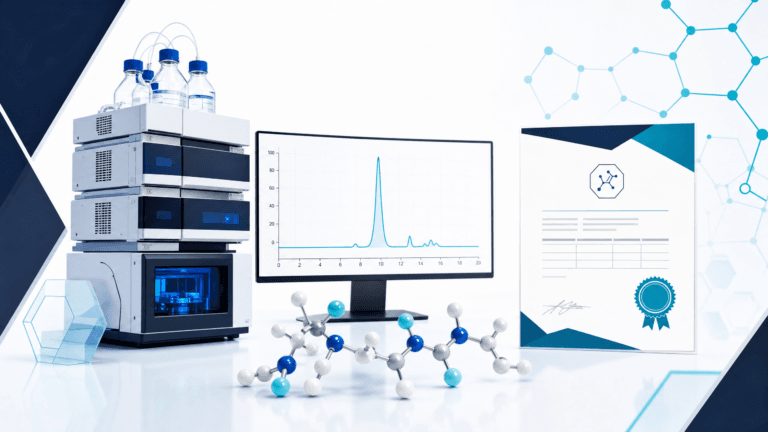
High-Performance Liquid Chromatography (HPLC) is the primary analytical tool used to determine the purity of a peptide sample. The technique involves pumping a sample mixture in a solvent (the mobile phase) at high pressure through a column packed with a solid adsorbent material (the stationary phase).
Different components within the sample interact differently with the stationary phase, causing them to travel at different speeds and separate as they exit the column. A detector (usually UV) measures the absorbance of the eluting compounds.
Assessing Purity and Separation
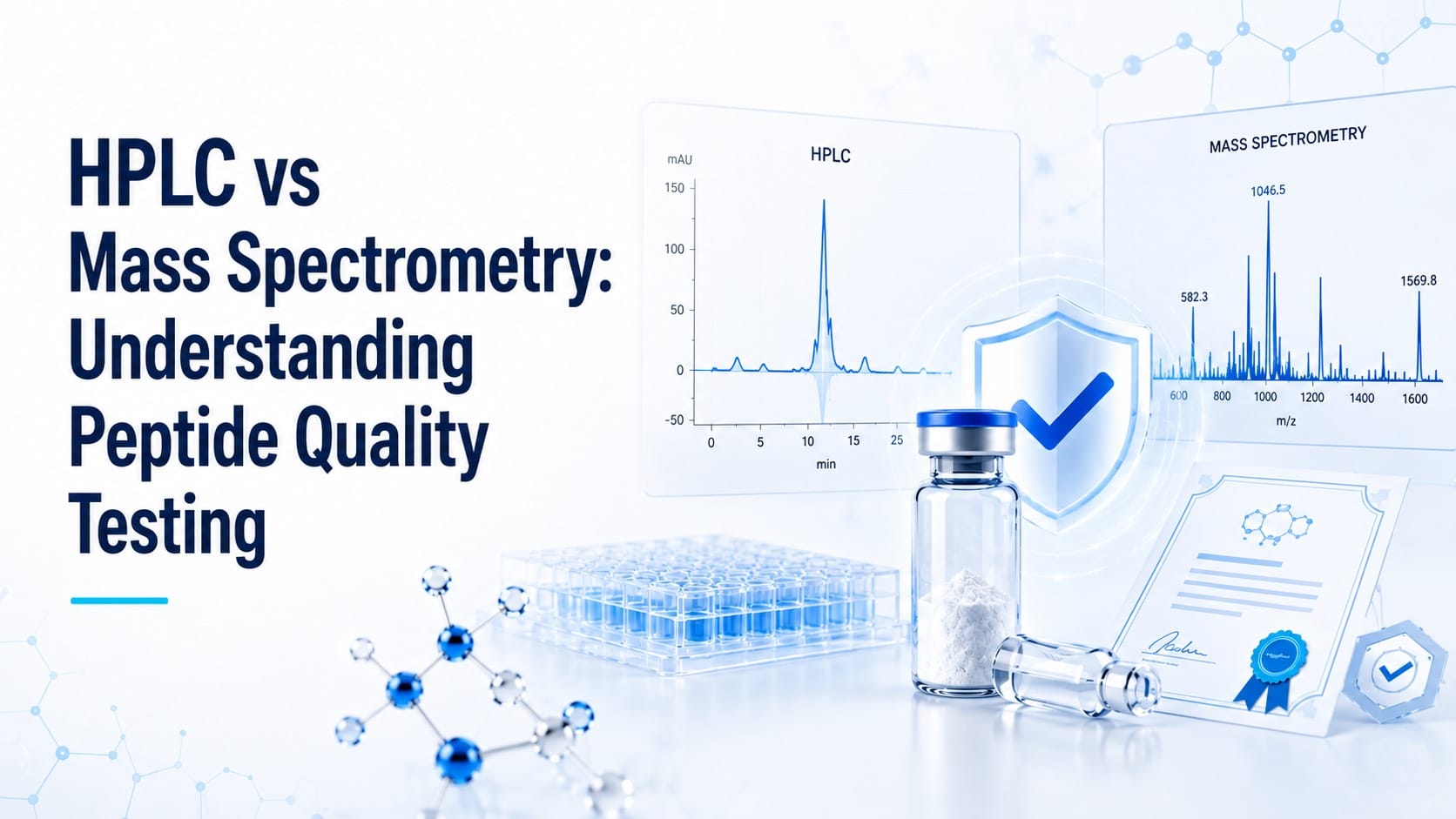
In the context of peptide purity analysis, HPLC is unparalleled in its ability to separate the target peptide from synthesis byproducts, such as truncated sequences or deletion errors. The resulting chromatogram displays peaks corresponding to each detected substance. The purity is calculated by comparing the area of the primary target peak against the total area of all peaks. For premium research applications, a single, sharp peak representing >99% of the total area is the standard.
What Does Mass Spectrometry Measure?
While HPLC tells you how pure a sample is, it cannot definitively tell you what the substance is. This is where Mass Spectrometry (MS) becomes indispensable. MS is an analytical technique that measures the mass-to-charge ratio of ions to identify and quantify molecules in simple and complex mixtures.
Confirming Molecular Identity
During mass spectrometry peptides analysis, the sample is ionised, and the resulting ions are sorted based on their mass. This generates a mass spectrum—a plot of the ion signal as a function of the mass-to-charge ratio. By comparing the observed molecular weight against the theoretical molecular weight of the desired amino acid sequence, researchers can definitively confirm that the correct peptide has been synthesised. If the observed mass matches the theoretical mass, the identity of the compound is verified.
Why Both Techniques Are Essential
Neither HPLC nor MS alone is sufficient for comprehensive quality assurance. A sample could theoretically display a 99% purity on an HPLC chromatogram, but without MS, you cannot be certain that the pure substance is actually your target peptide—it could be a highly pure incorrect sequence.
Conversely, MS might confirm the presence of the correct molecular weight, but without HPLC, it cannot accurately quantify the percentage of impurities or synthesis byproducts present in the vial. Together, they provide a complete profile: MS confirms the identity, and HPLC quantifies the purity.
Interpreting Results on a COA
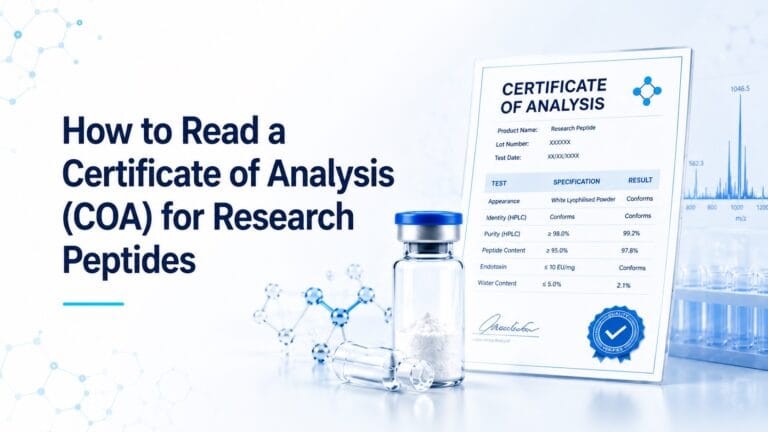
When reviewing a Certificate of Analysis for third party tested peptides UK, researchers should look for both datasets. You can view real examples on our batch verification page. The MS section should show a primary ion peak that aligns precisely with the expected molecular weight. The HPLC section should feature a chromatogram with a dominant, symmetrical peak, accompanied by a table detailing the integration data that confirms the purity percentage (e.g., >99%).
Why This Matters for Your Research
At ZENTRA Peptides, we recognize that absolute analytical certainty is required for reproducible in vitro research. That is why every batch of our precision research compounds is subjected to rigorous dual-method verification. By employing both HPLC and Mass Spectrometry, and ensuring our compounds are third party tested, ZENTRA Peptides provides researchers with the definitive quality assurance necessary for high-level scientific inquiry. For a step-by-step walkthrough, read our guide on how to read a COA.
Disclaimer: All compounds available from ZENTRA Peptides are intended strictly for in vitro research and laboratory use only. They are not intended for human consumption, therapeutic application, or any form of bodily introduction. Researchers must comply with all applicable local regulations.