What Is a Lyophilised Peptide? Freeze-Dried Powder Explained
What Is a Lyophilised Peptide?
Short answer: A lyophilised peptide—also spelled lyophilized peptide—is a peptide solution that has been frozen and dried under vacuum so the water leaves by sublimation. The resulting freeze-dried powder is generally more stable for laboratory storage and transport than the same peptide in solution, although it must still be protected from heat, light and moisture.
When procuring high-quality UK peptides for laboratory research, investigators will consistently note that these compounds arrive as a solid, white powder rather than a liquid solution. This state is achieved through a sophisticated process known as lyophilisation, or freeze-drying. But why is this specific preservation method so universally adopted in peptide synthesis and distribution?
Understanding the lyophilisation process is crucial for proper laboratory handling, storage, and eventual reconstitution. This article explores the scientific rationale behind lyophilised peptides and why this format is essential for maintaining molecular integrity.
How Peptide Lyophilisation Works
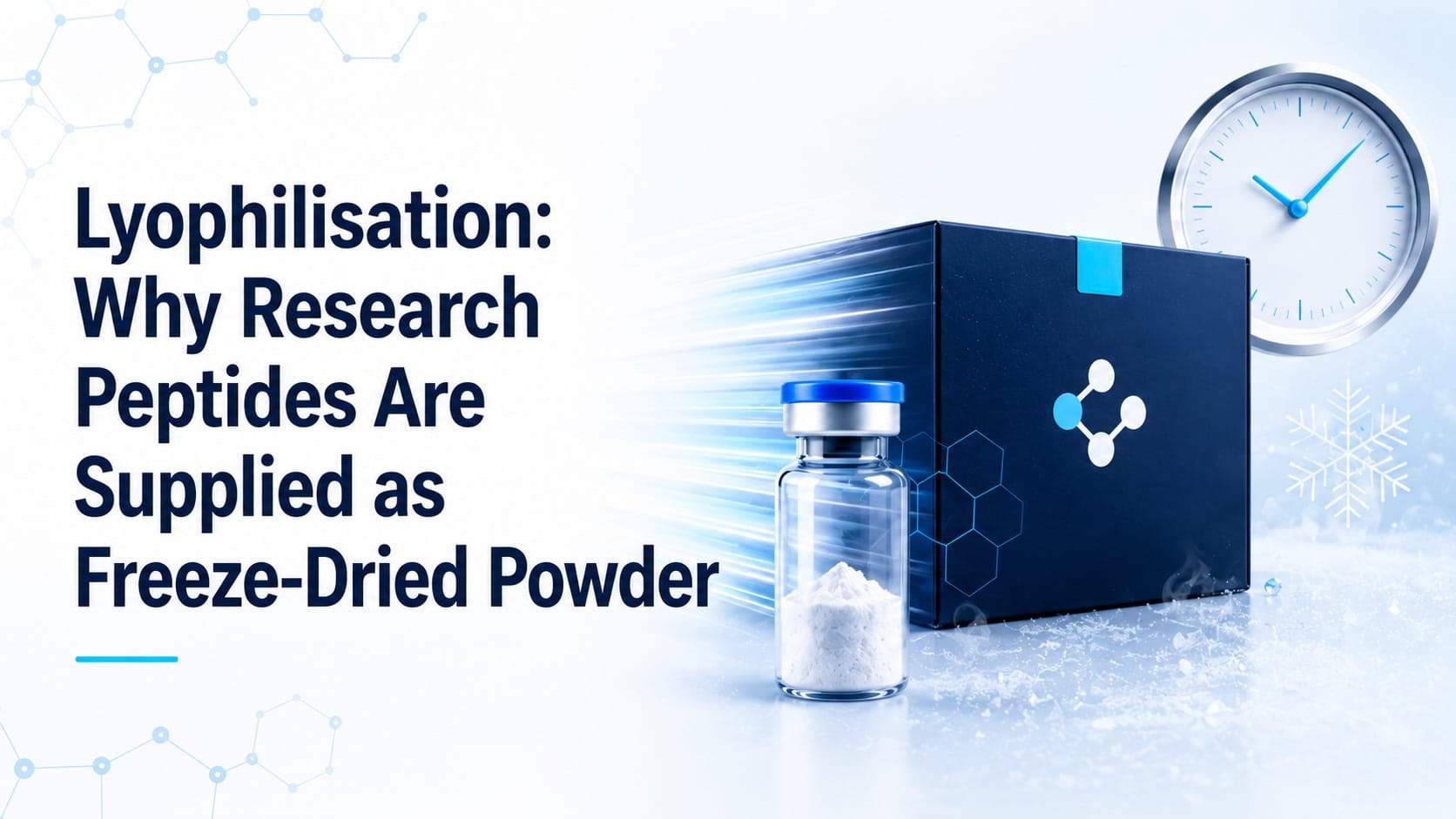
Lyophilisation is a dehydration process typically used to preserve perishable materials or make the material more convenient for transport. The process involves freezing the peptide solution and then reducing the surrounding pressure to allow the frozen water in the material to sublimate directly from the solid phase to the gas phase.
Lyophilisation removes water from a frozen preparation under reduced pressure. It can reduce moisture-related degradation, but it does not guarantee that every peptide remains unchanged. Formulation, storage and analytical verification still matter.
Why Peptides Are Supplied as Powder
1. Exceptional Molecular Stability
In an aqueous solution, peptides are highly susceptible to degradation. Water facilitates various chemical reactions, including hydrolysis, deamidation, and oxidation. By removing the water, the peptide is placed into a state of suspended animation. Freeze dried peptides are remarkably stable, preventing the spontaneous breakdown of the amino acid chain.
2. Extended Shelf Life
The primary advantage of lyophilisation is the dramatic extension of shelf life. A peptide in liquid solution may degrade within days or weeks, even under refrigeration. The appropriate shelf life depends on the peptide sequence, formulation, residual moisture and validated storage conditions; a generic multi-year guarantee is not appropriate. This extended peptide stability UK researchers rely on is critical for long-term studies and bulk procurement.
3. Protection During Transit
Transporting biological compounds presents significant logistical challenges. Temperature fluctuations during shipping can rapidly degrade liquid peptides. Lyophilised powder is significantly more resilient to transient temperature changes, ensuring that the compound arrives at your laboratory with its high purity intact, ready for reconstitution.
Proper Storage of Lyophilised Compounds
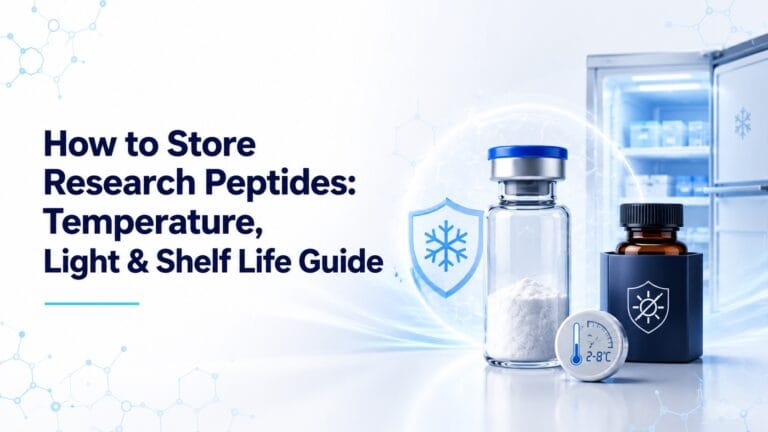
While lyophilisation confers excellent stability, proper storage protocols remain essential. Upon receipt, lyophilised peptides should be stored away from direct light and moisture. For short-term storage (weeks to months), refrigeration at 4°C is generally sufficient. Our peptide storage guide covers optimal conditions in detail. For long-term preservation (months to years), deep freezing at -20°C or -80°C is highly recommended.
It is critical to allow the vial to reach room temperature before opening. Opening a cold vial exposes the interior to ambient humidity, leading to condensation. Moisture introduced to the lyophilised powder can initiate premature degradation, compromising the integrity of your experiment.
Lyophilisation and Purity
The lyophilisation process also plays a role in the final purity of the compound. During synthesis and purification (often via HPLC), peptides are dissolved in specific buffers. Lyophilisation removes these volatile solvents, leaving behind the purified peptide salt (such as an acetate or TFA salt). This ensures that researchers are working with a highly concentrated, pure compound without interference from residual synthesis solvents.
Laboratory Handling Reference
Peptide manufacturer Bachem’s handling and storage guidance explains why tightly sealed dry storage, sequence-specific stability and warming a sealed vial before opening matter. Follow the specification and validated method for your exact research material.
Why This Matters for Your Research
At ZENTRA Peptides, we employ state-of-the-art lyophilisation techniques to ensure that our precision research compounds maintain their exceptional purity from our laboratory to yours. By providing stable, third party tested lyophilised powders, we eliminate the variables associated with compound degradation. ZENTRA Peptides is committed to supplying the UK research community with reliable, stable materials that form the bedrock of reproducible scientific investigation. When you are ready to reconstitute, pair your peptides with our bacteriostatic water.
Disclaimer: All compounds available from ZENTRA Peptides are intended strictly for in vitro research and laboratory use only. They are not intended for human consumption, therapeutic application, or any form of bodily introduction. Researchers must comply with all applicable local regulations.




2 Comments